
Streamline Recall Management with TEXT2DRIVE
Automate recall notifications, boost completion rates, and drive service revenue effortlessly through text messaging.

Text2drive helps dealerships
Keep Customers Informed Throughout the Recall Repair Process
Schedule Demo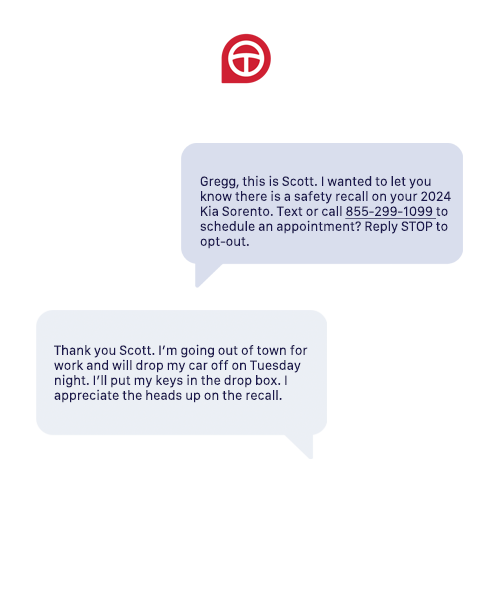
01
Recalls Made Simple with TEXT2DRIVE
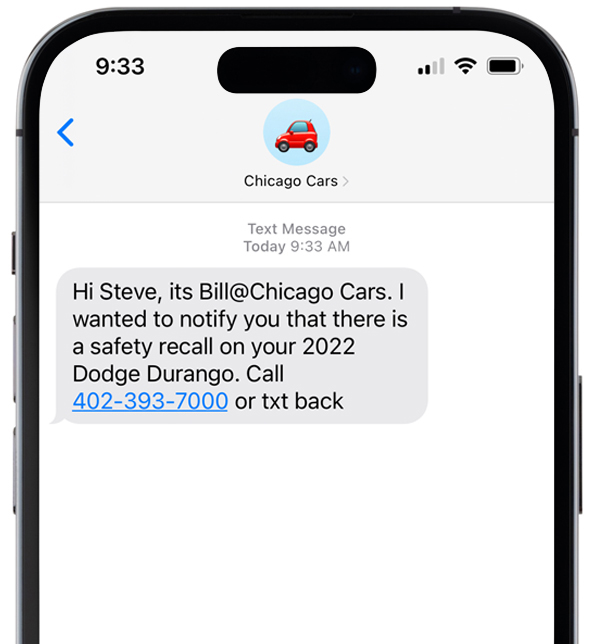
TEXT2DRIVE makes managing vehicle recalls effortless. Traditional communication methods like emails or mail often go unnoticed, causing many customers to miss important recalls. With TEXT2DRIVE’s automated text notifications, you can significantly increase recall completion rates while boosting service revenue—up to $17,000 in just three months. Effortlessly generate detailed reports of affected customers and notify them instantly via text. This streamlined approach not only improves recall completion rates but also enhances operational efficiency, builds customer trust, and drives higher service revenue.
02
Why Automate Recall Notifications?
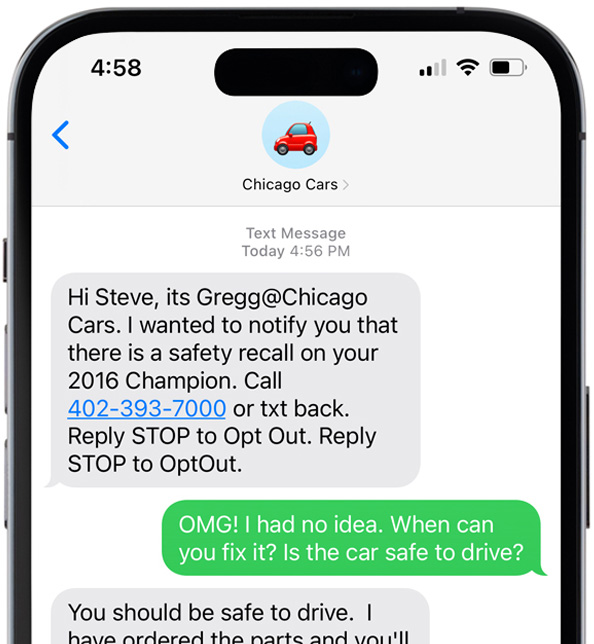
Keeping customers informed about vehicle recalls is a critical responsibility for dealerships. Done right, recall management improves customer satisfaction, increases recall completion rates, and ensures safer driving experiences. The key is to meet customers where they are—on their smartphones. Text messaging is the fastest, most effective way to share vital recall information. With TEXT2DRIVE, you can automate the entire process, alleviating manual effort while keeping your customers in the loop.
98%
Text Messaging Open Rate
$20,000
In Additional Revenue (with use of full solution)
45%
Sales & Service Response Rate
03
Boost Recall Completion Rates
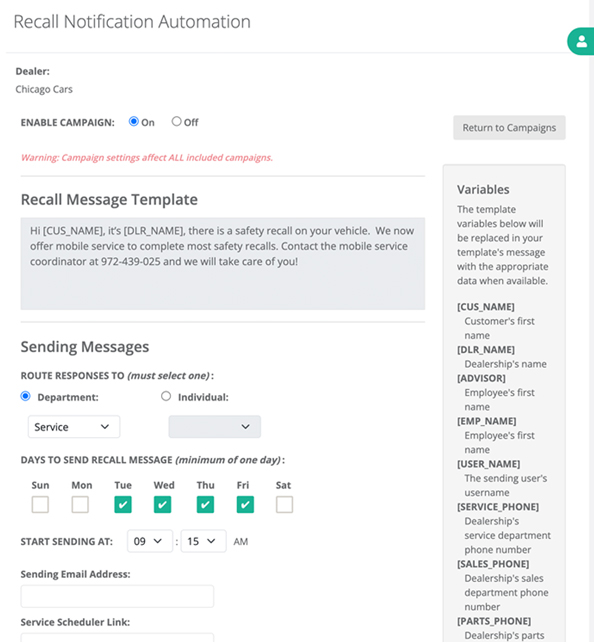
Text-based recall notifications are 4x more effective than traditional methods. With TEXT2DRIVE, setup is easy—just set preferences, and our system does the rest. Boost recall completion, enhance customer satisfaction, and increase service revenue, all in four simple steps.
Here’s how TEXT2DRIVE works to streamline recall management and boost your results:
Database Review: We start by analyzing your dealership’s customer database.
Recall Matching: Customer data is cross-referenced against open safety recalls.
Detailed Reporting: A comprehensive report is generated, allowing you to review and prioritize recall notifications.
Notification Filtering: Tailor recall notifications by specific codes or categories to ensure precision.